Specializing in the production of wire mesh fence and sound barriers
What causes sound leakage after the installation of a bridge sound barrier?
2022-12-07


What are the causes of sound leakage after the installation of bridge sound barriers?
Bridge sound barriers are widely used in traffic safety projects, effectively reducing the impact of traffic noise on surrounding residential areas. However, improper installation during construction can easily lead to sound leakage. So how can this situation be avoided?
When highway sound barriers are built on elevated bridges, their foundations are mostly cement crash walls. Bridge sections have more cement crash walls than roadbed sections. However, these crash walls increase the difficulty of installing sound barriers and, to some extent, cause sound leakage. After installation, the sound barrier acts like a huge wall, concentrating noise and spreading it outwards from the gaps. This is a factor that causes increased noise after the installation of bridge sound barriers. There are several reasons for leakage at the bottom:
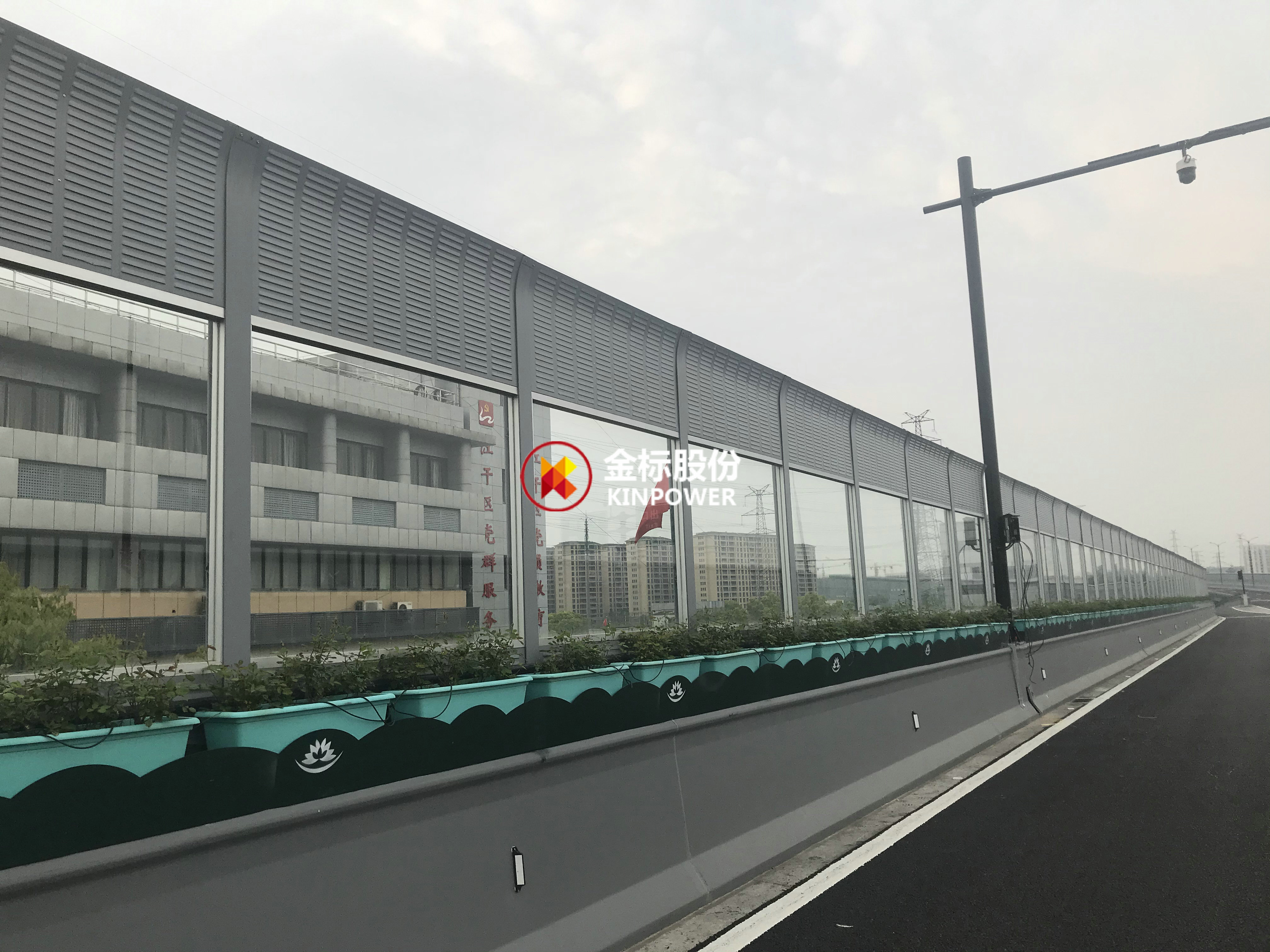
1. Bridge guardrails
Guardrails have already been installed on the cement crash walls on both sides of the bridge. Removing the bridge guardrails would not only increase costs but also consume excessive labor hours. Some clients, in order to save costs, directly use the H-steel columns of the sound barrier to bypass the metal guardrails, combining them with the existing chassis and metal guardrails. However, this may create gaps.
2. Is the bridge deck grooved?
Old bridges were not designed with sound barriers during construction, so the crash walls did not have reserved pre-embedded holes for posts. When we need to install sound barriers later, if we directly use the U-shaped chassis of the riding card to ride on the crash wall, because the bridge sound barrier posts are not connected and welded to the chassis, the thickness of the chassis steel plate will prevent the baffle board from connecting to the crash wall, resulting in gaps.
3. Styles of column-type chassis
In addition to U-shaped chassis, flat chassis are also a type of bridge sound barrier. When using flat chassis without pre-embedded holes on cement crash walls, support plates need to be added to the bottom of the columns. The length of the support plate is the height of the hanging sound barrier board, preventing the baffle from connecting to the top of the crash wall, creating cracks. This leads to serious bottom leakage, greatly reducing the sound insulation effect of the sound barrier.
The installation of bridge sound barriers is a complex process, the complexity lies in drilling. When using a power drill on cement, if you encounter embedded steel bars, not only will the drill bit be damaged, but also the drilling time will increase, reducing the progress of the estimated schedule. However, regardless of the method used, there should be no gaps. This determines the sound leakage of the bridge sound barrier and is also an indicator that determines its sound insulation performance.
The above is an explanation of "What are the causes of sound leakage after the installation of bridge sound barriers?" I hope the above explanation can help everyone. Thank you for watching, and see you next time.
Tag:
Latest information

Contact kinnoise
WhatsApp/Mob:+86-18617605888
Email:jinbiaogufen@163.com
Address:No. 27, Wei'er Road, East Zone, New Industrial Park, Anping County, Hengshui City, Hebei Province

Tel:
E-mail:
Online message
Please keep your phone open and we will get in touch with you in time, or you can call us directly.